RollKall Founder and CEO Chris White spent eight years working the same off-duty detail. In this first-person piece he argues that most off-duty work still goes unverified, that the technology to flag a discrepancy the day it happens already exists, and that verification should be the standard every agency requires of every vendor, including his own.

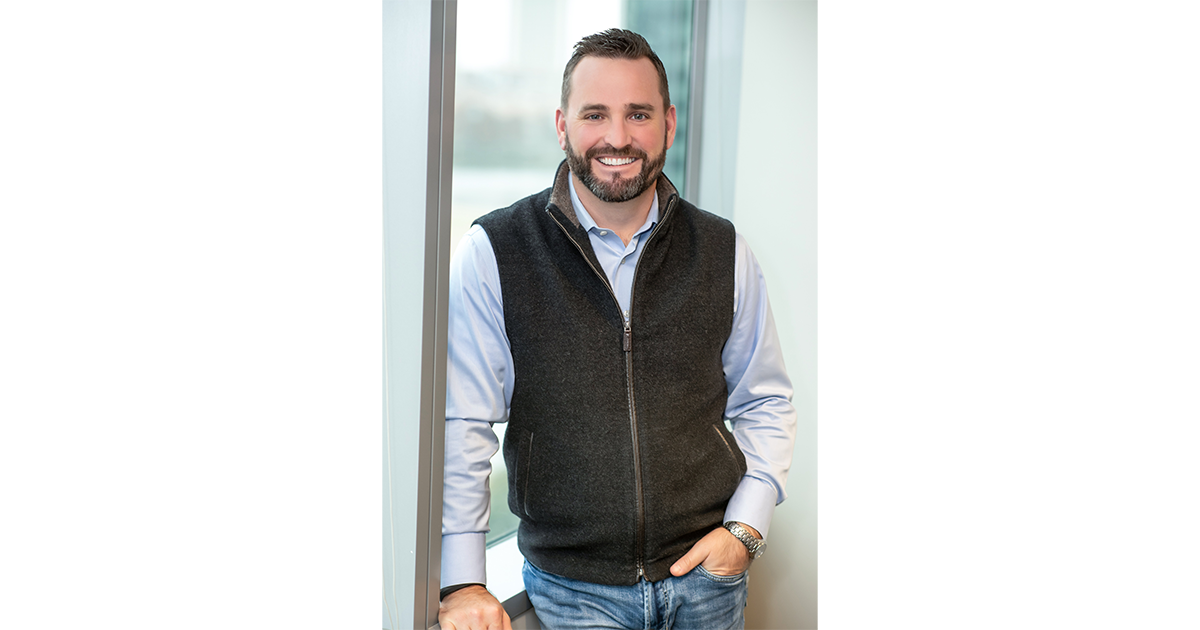
By Chris White, Founder and CEO, RollKall Technologies
Let me be transparent before I say another word. My company builds technology that helps agencies manage off-duty police work. I have a commercial stake in what I am about to write, and I would rather you know that up front and weigh my argument rather than discover it later and dismiss me. What I have to say would be just as true if I had never started a company in this industry.
I was a full-time Texas Peace Officer commissioned in 1997. From May 2000 to July 2008, I worked off-duty as a gate guard and community patrolman for a private subdivision on Lake Palestine in East Texas. Every Friday night. Every Saturday night. Most Sundays. Every holiday. For eight straight years I took maybe one or two weekends off a year to be with my wife and kids. On the rare weekends I got away, my father, a full-time cop himself, covered the post and gave me the money he made, working those shifts for free, because he understood two things at once: I needed the income badly, and I needed a little time at home with my family. He knew how hard I was working for them. That is not a story I tell for sympathy. It is the reason I know this work from the inside, and why it's personal to me.
I spent nearly twenty years as a commissioned officer in Texas. I made Detective at 24, Captain at 30, and finished as a Chief Investigator and SWAT commander. Like most officers I know, off-duty work was not extra. It was how I kept my family afloat. So when I talk about the off-duty or paid-detail system, I am not talking about an abstraction or a market. I am talking about the corner I stood on, the income I depended on, and the families all over this country who depend on it right now.
That is exactly why I can no longer stay quiet about what we keep getting wrong.
Across the country, sworn officers work off-duty details every day. They put on the uniform, take the patrol car, and provide security for neighborhoods, construction sites, community districts, and businesses. The work is legitimate and the people doing it are, overwhelmingly, honest. This is not an attack on them. They are me, twenty years ago.
But here is the truth the profession has avoided for too long: most of this work happens in the dark. An officer agrees to a job, shows up or does not, records hours that are accurate or are not, and submits a bill to a business. In a great many programs, no one verifies any of it. Not whether the officer was there. Not whether the hours were real. Not even whether the business hiring an armed law enforcement officer is a legitimate one.
We do not have to imagine what happens when no one is watching. The recent arrests of two law enforcement officers in Florida are only the latest reminder. What should stop every one of us cold is how they were caught. Not by the program. Not by any internal control. They were caught because criminal investigators put a GPS tracker on a vehicle and compared where the officer actually was against what the officer billed. The accountability came after the fact, in a criminal case.
That should embarrass anyone who loves this profession, because the gap it exposes is not unique to one agency. It is nearly everywhere. The systems most agencies use to manage off-duty work, if they exist at all, were built to push paper, not to ensure accountability. They take an officer's word for where they were and what they did, and they cut a check or worse... hand them cash. When a system assumes honesty and verifies nothing, it does not just fail to catch the dishonest few. It leaves the honest majority, the officers standing at that gate to feed their families, working under a suspicion they did nothing to earn it.
Here is the part that we should be talking about. This is a solved problem. The same capability that caught those officers after the fact, location verification, geofencing, automated checks that flag when billed hours do not match reality, can be built into the front end of any off-duty program. Not as a criminal case months later, but as a routine control that flags a discrepancy the day it happens. The technology exists. It is in use by major departments today. The only open question is whether other agencies will require it.
And this is where I will be direct, because the profession I love deserves directness instead of comfort. The agencies that have been shown this gap, that have been told the controls exist, and that have chosen not to act, are making a decision. They are deciding that the discomfort of changing how it has always been done outweighs their duty to know how their officers, their equipment, and their authority are being used. That is not a technology problem. It is an accountability problem, and it belongs to leadership.
I understand the resistance better than most. Off-duty programs are tangled up with union agreements, with officer income that families count on, with decades of "this is how we have always done it." I lived inside all of that. But none of it survives the questions that get asked in every lawsuit and every news story after something goes wrong: what did you know, and what did you do to make sure this program was legitimate? When the honest answer is "nothing," the agency owns everything that follows.
I am not asking anyone to buy a product. There is more than one way to solve this and more than one company that can help. What I am asking for is a standard of accountability. Any agency that authorizes its officers to work off-duty, armed, in uniform, on public equipment, should be able to verify that the work was real, that the hours were honest, and that the business on the other end is legitimate. That should be the floor, written into policy and required of every vendor an agency works with, including mine.
The officers who do this work the right way, the ones giving up their weekends and holidays the way I did, deserve a system that protects them instead of lumping them in with the few who cheat. The public deserves to know that an armed officer in a police uniform is accountable for every hour billed in their name. And a profession that asks for the public's trust every single day cannot keep expecting that trust while looking away from a problem it already has the tools to fix.
I gave this profession twenty years, and on the weekends I needed to be home, my father covered my post and gave me what he made so my family would not go without. He worked for free because he knew how hard I was carrying it. I am not willing to watch the honest work that held my family together get dragged down by a system too comfortable to verify itself.
We have the technology. We have the evidence of what happens without it. What we have lacked is the will.
It is past time we found it.
A 30-minute demonstration walks through the full platform: scheduling, finance integration, payments at scale, and the operating models behind it.
Dedicated to first responders, RollKall simplifies every aspect of vendor-paid details.